


Exploring the realm of smart agriculture tools for sustainable farming unveils a world where technology intersects with traditional farming practices, paving the way for innovation and efficiency. As we delve into the realm of precision agriculture and data-driven decision-making, the landscape of farming is undergoing a transformative shift towards sustainable practices.
Introduction to Smart Agriculture Tools
Smart agriculture tools refer to the use of technology to enhance farming practices and achieve sustainable agriculture. These tools play a crucial role in increasing efficiency, productivity, and environmental sustainability in the agriculture industry. By leveraging data-driven insights and automation, smart agriculture tools help farmers make informed decisions and optimize their resources effectively.
Role of Smart Agriculture Tools in Sustainable Farming
- Remote sensing technology: Allows farmers to monitor crops, soil conditions, and weather patterns from a distance, enabling timely interventions and resource management.
- Precision farming equipment: Helps farmers apply inputs such as water, fertilizers, and pesticides with precision, reducing waste and environmental impact.
- IoT devices: Enable real-time data collection and analysis for better crop monitoring, irrigation control, and pest management.
- Automated machinery: Increases efficiency and reduces labor costs by performing tasks like planting, harvesting, and spraying with precision and consistency.
Importance of Adopting Technology in Modern Agriculture Practices
Technology adoption in agriculture is crucial for meeting the growing global food demand sustainably. By embracing smart agriculture tools, farmers can improve crop yields, minimize resource wastage, reduce environmental footprint, and enhance profitability. The integration of technology also empowers farmers with valuable insights to make data-driven decisions, adapt to changing conditions, and mitigate risks effectively.
Examples of Smart Agriculture Tools Used in the Industry
- Weather monitoring systems: Provide real-time weather data to help farmers plan irrigation, pest control, and harvesting activities efficiently.
- Drones: Enable aerial imaging for crop health assessment, yield estimation, and identification of areas needing attention.
- Soil sensors: Measure soil moisture, temperature, and nutrient levels to optimize irrigation and fertilization practices.
- Farm management software: Streamline farm operations, track inventory, manage finances, and analyze performance for informed decision-making.
Benefits of Smart Agriculture Tools
Smart agriculture tools offer numerous advantages for sustainable farming practices, revolutionizing the way farmers work and manage their crops.
Increased Efficiency and Precision
Smart tools, such as drones and sensors, enable farmers to monitor crop health, soil conditions, and irrigation needs with precision. This data-driven approach allows for targeted interventions, reducing waste of resources like water and fertilizers.
Enhanced Productivity
By optimizing farming practices through real-time data collection and analysis, smart tools help farmers make informed decisions that can lead to increased yields. This leads to higher productivity and profitability for agricultural operations.
Reduced Environmental Impact
Smart agriculture tools promote sustainable farming practices by minimizing the use of chemicals, water, and energy. By applying resources only where and when needed, these tools contribute to a more environmentally friendly approach to agriculture, reducing pollution and preserving natural resources.
Types of Smart Agriculture Tools
Smart agriculture tools encompass a variety of technologies that aim to improve efficiency, productivity, and sustainability in farming practices. These tools are designed to collect data, monitor conditions, and automate processes to help farmers make informed decisions and optimize their operations.
Sensors
- Soil Moisture Sensors: These sensors measure the moisture content in the soil, enabling farmers to determine irrigation needs accurately.
- Weather Sensors: Weather sensors provide real-time data on temperature, humidity, rainfall, and wind speed, helping farmers make weather-informed decisions.
Drones
- Field Mapping Drones: Drones equipped with cameras and sensors can capture aerial images of fields for crop monitoring and yield estimation.
- Spraying Drones: Drones can be used for precision spraying of pesticides and fertilizers, reducing chemical usage and minimizing environmental impact.
Automated Machinery
- Robotic Harvesters: Automated machinery can harvest crops efficiently and accurately, reducing labor costs and increasing productivity.
- Autonomous Tractors: These self-driving tractors can perform tasks such as plowing, seeding, and spraying with precision and consistency.
Data Analytics
- Farm Management Software: These tools analyze data collected from sensors and drones to provide insights on crop health, soil conditions, and yield predictions.
- Precision Farming Platforms: Data analytics platforms help farmers make data-driven decisions on crop management, resource allocation, and optimization of farming practices.
Impact of Smart Agriculture Tools on Sustainability
Smart agriculture tools play a crucial role in promoting sustainability in farming practices by enhancing resource management, reducing waste, and optimizing crop yields. Let's delve into how these tools contribute to long-term environmental health.
Resource Management with Smart Tools
- Smart tools enable precise monitoring and management of water usage, ensuring that crops receive the right amount of irrigation without wastage.
- By analyzing soil conditions and crop requirements, these tools help farmers optimize the usage of fertilizers, reducing excess application and minimizing environmental impact.
- Smart agriculture tools also assist in monitoring pest infestations and diseases, allowing for targeted pesticide application only when necessary, thus minimizing chemical usage.
Role of Precision Agriculture in Waste Reduction
- Precision agriculture techniques, enabled by smart tools like drones and sensors, help farmers identify areas of the field that require specific attention, reducing overall input usage.
- By employing precision farming practices, farmers can adjust planting density, nutrient application, and irrigation levels based on real-time data, optimizing crop yields while minimizing resource wastage.
Promotion of Sustainable Farming Practices
- Smart agriculture tools encourage the adoption of sustainable farming practices such as conservation tillage, crop rotation, and cover cropping, which help improve soil health and reduce erosion.
- By providing insights into crop health, soil conditions, and weather patterns, these tools empower farmers to make informed decisions that benefit both their productivity and the environment in the long run.
Challenges and Adoption Barriers
Smart agriculture tools offer numerous benefits, but their adoption in the farming sector comes with its own set of challenges. From high initial costs to the need for specialized training, farmers face various obstacles when integrating these technologies into their operations.
Cost Implications of Implementing Smart Agriculture Technologies
The implementation of smart agriculture tools often requires a significant upfront investment, which can be a barrier for many farmers, especially small-scale ones. The cost of purchasing the necessary equipment, sensors, and software can be prohibitive, making it challenging for farmers to adopt these technologies.
Additionally, ongoing maintenance and upgrades further add to the financial burden of implementing smart tools on a farm.
Training and Support Needed for Adoption
In addition to the cost implications, farmers also require adequate training and support to effectively utilize smart agriculture tools. Many farmers may lack the necessary technical skills to operate and maintain these technologies, requiring comprehensive training programs to bridge the knowledge gap.
Moreover, ongoing technical support is essential to address any issues or challenges that may arise during the adoption process. Without proper training and support, the full potential of smart agriculture tools may not be realized, further hindering their adoption in the farming sector.
Last Recap
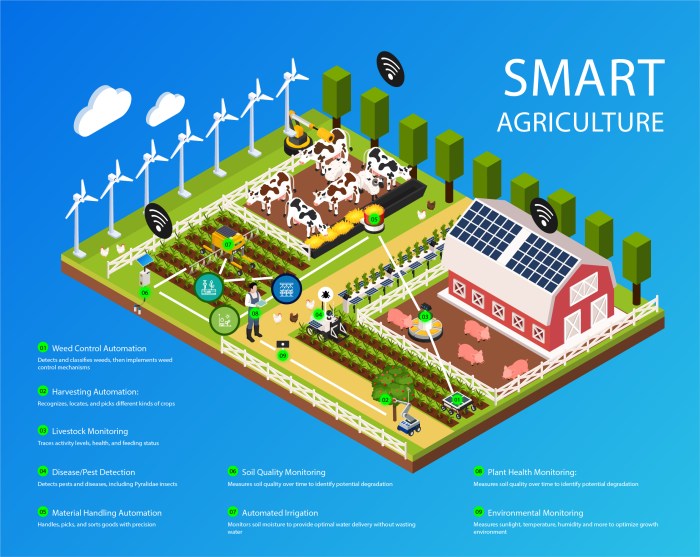
In conclusion, the integration of smart agriculture tools not only enhances productivity and efficiency but also plays a pivotal role in fostering sustainable farming practices for the future. Embracing these technological advancements is not just a choice but a necessity in ensuring a greener, more sustainable agricultural sector for generations to come.
Clarifying Questions
How do smart agriculture tools contribute to sustainability?
Smart agriculture tools help in optimizing resource management, reducing waste, and promoting long-term environmental health through precision farming practices.
What are some common challenges faced in adopting smart agriculture tools?
Common challenges include initial investment costs, technical expertise requirements, and the need for ongoing training and support.
Can smart tools really outperform traditional farming methods?
Smart tools have shown to increase efficiency, productivity, and sustainability compared to traditional farming methods, making them a viable choice for modern agriculture.